Sound Design And The Environment
ROLE
Recording Engineer & Sound Designer
Assignment Brief
Your Sound Manipulations and Soundscapes should evidence the Sound Design techniques used across both works: sound manipulation, synthesis, sampling, audio editing and effects processing as well as the key sound recording techniques you have employed. Your work is required to evidence effective management of your production processes, and individual workflow for each work demonstrated through your compositional arrangement contexts reflecting professional practice appropriate to the medium.

YEAR
2021
Equipment
Tascam DR-100MKII linear PCM recorder
PLATFORM
Logic X
My Project
The Bells Of Saint John
The notion of making a work based on non-traditional instrumentation was one I wanted to dive headfirst into from the outset. As someone who creates many sorts of music and sound design, the concept of directly reconnecting with the harmonies and sounds around me had become overwhelming. “Wherever we are, what we hear is mostly noise. When we ignore it, it disturbs us. When we listen to it, we find it fascinating.” The possibilities I was subsequently able to see with this in mind, within the context of reimagining how the voice of the music was processed and perceived, was a significant challenge in terms of fitting with what I believed provided uniqueness
.png)
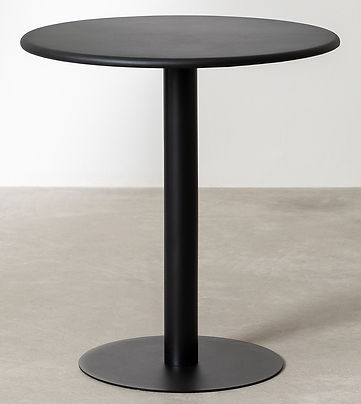
Unbeknownst to myself, I received a spark of inspiration during a university break. The framework that my classmates and I were already relying on to sustain the many nutrients we wanted to ingest that day took on a new shape. As a single metal pipe, which supported the enormous disc on which our meal was served, echoed in response to an unintentional strike of my hand against its base. I started to hear a harmony of tone cut through the roar of the surrounding traffic, and so my discovery began.
Using the Tascam D-100mkII Linear PCM Recorder (Tascam) to isolate and manipulate the sound I wanted to record, I moved the table to an editing suite and obtained drumsticks and a mallet to create various tones. Over the course of an hour, I tried my best to arrange the Tascam’s settings correctly in order to effectively capture the harmonics. I captured the sound using the inbuilt unidirectional microphones with a medium sensitivity and discovered that putting the mic above or below the tabletop produced very different pitch and tone results. Because of the coarse surface of the table, I discovered that the mallet was very effective at producing swirling tones as I bushed it in circles. Whereas, as I later realised, the drumsticks made sufficiently harsh and high frequencies that they clipped the audio recording.

After exporting all my recordings into Logic, I divided the sounds into several styles. I discovered that I had two distinct tones: one that was prolonged and droning, along with another that was more abrasive in its attack and release. To maintain the random quality of the sounds, I avoided using a tempo or rhythm for the drumming. I discovered that the harmonics had a tone and release like that of a bell.
I find the use of electro-acoustic music and the concept of using conventional instruments and then modifying them to create new textures that are utterly unlike the original especially appealing in music, since the mix of natural and unnatural sounds produces a unique aural world for the listener. I was inspired by Stockhausen Kontakte (Stockhausen, 1960), in which included several percussion parts, a piano and various electronic noise.
My inspiration for this piece came in large part from the film Bladerunner 2049 (Bladerunner 2049, 2018), which features a lot of sounds that are heavily manipulated and futuristic in nature like it’s original Bladerunner (Bladerunner, 1982) was for its use of synthesizers. In a similar vein to Stockhausen's Kontakte work, it effectively exhibits sound design in an immersive manner, since there is an appropriate mix of natural and produced sounds.
Even though it was recorded primarily with synthesisers and audio loops, Warp Records Artificial Intelligence is remembered as the album that gave birth to [Artificial] Intelligent Dance Music (I.D.M.) and revitalised the techno genre by emphasising the texture and substance of sound rather than its ability to be danced to. The utilisation of glitchy noises and chopped-up audio gives the noise a distinct digital and suspenseful feel that is all its own.

Working with Karina's Flex Time, Flex Pitch, and Varispeed instructions from class, I started to experiment with altering the speed of the audio using Logic's algorithm to get the desired result. I discovered that by moving the automatic markers over the audio, not only did the speed vary, but so did the tone, much as how playing a record at the incorrect speed causes a song to sound distorted.

The sounds were altered from their original state using a variety of effects including automation methods. Consequently, I modulated the panning of most of the sounds to make them travel and keep momentum going, so generating a sonic landscape for both the audience and completely immersing them in the audio. Additionally, I modulated the panning of some of sounds to create movement and keep things flowing. Additionally, a flanger, phaser, and tremolo were used to provide movement to the sounds, and all these effects were adjusted to create tension and motion within the effects and their transitions.
By combining this with the flex tool and the polyphonic algorithm, I was able to layer the sounds and produce intriguing harmonic aspects. I was highly influenced by previous work I had done in college which I wanted to replicate the notion of different-sized tape loops being played at varying speeds. For me, the motivation can only be described as a tribute to the incredible artistry that went into creating the Doctor Who (Grainer, 1963) soundtrack.
The Pub
There are three components to a soundscape: The Keynote sound; Soundmarks and Foreground sounds/signals.
-
The Keynote sounds of a landscape are those created by its geography and climate: water, wind, forests, plains, birds, insects, and animals. Many of these sounds may possess archetypal significance; that is, they may have imprinted themselves so deeply on the people hearing them that life without them would be sensed as a distinct impoverishment.
-
Signals are foreground sounds and they are listened to consciously. In terms of the psychologist, they are figure rather than ground. Any sound can be listened to consciously, [but] we will confine ourselves to mentioning some of those signals which must be listened to because they constitute acoustic warning devices: bells, whistles, horns and sirens.
-
The term soundmark is derived from landmark and refers to a community sound which is unique or possesses qualities which make it specially regarded or noticed by the people in that community. Once a soundmark has been identified, it deserves to be protected, for Soundmarks make the acoustic life of the community unique.
Murray Schafer’s The Soundscape Highlights these are the primary components of a soundscape, however none is limited to a particular sound nor the sound to a certain category.

My initial intention for the soundscape was to create an aural world evocative of a day spent at a local Comicon event. To record sounds, I utilised a Tascam with an xlr cable hooked to a shotgun microphone and went on numerous sound walks to document musicians, conversations, announcements, camera noises, prop sound effects, and the bustle of the transport on my way there. The issue I had while editing my sounds and arranging the audio was a lack of an original concept for my work, which resulted in an audio piece that did not mimic a real-life setting due to the recordings being recorded in several locations and with no transition between them. Due to the fact that the majority of my recordings took place within the convention hall, the piece had a lot of background noise, which caused particular high frequencies associated with these specific keynote sounds to overlap, resulting in a muddy and incorrect sounding piece.
I decided to restart my audio, this time focused on a single location to create a more realistic soundscape. I intended to build an audible representation of a location that I was intimately familiar with and that had a large number of recognisable regular and frequent noises. I selected my workplace since it has several distinctive sound markers for this setting, such as an ice machine, the movement of empty barrels, and a coffee machine, all of which contribute to the composition's accuracy and immersion.
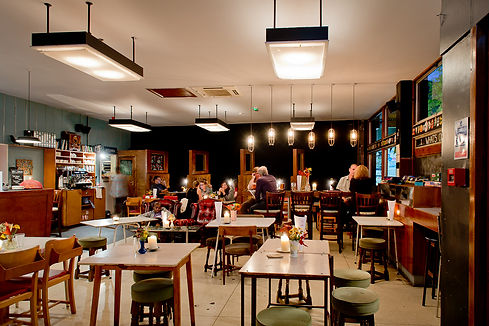
I leased the Tascam from the equipment department and arrived at work just as the day's operations were about to begin. I commenced by doing a soundwalk around the main dining area, recording the sounds of people passing, tables being moved, and staff members working. The personnel in the bar conversing as they prepared for a shift served as the inspiration for this soundscape, and so I made certain to capture both crowded places and chores that needed to be done. I also took a visit into the cellar to provide a change of scenery, as we would regularly do throughout a shift to bottle up and manage beer lines. This gave the recording a new tone, since the cooling fan is somewhat invasive.
After recording the soundscape's foundation layers, I opted to utilise the shotgun mic to acquire several of the area's sound markings. Since the drones of the ice machine are one of the most typical noises I hear behind the bar, I captured the audio of the ice tumbling into the tray below to capture the machine's hum. As I was utilising the shotgun microphone, I was able to concentrate on the source of the disturbance and avoid inadvertently adding too much background noise to the recording. I proceeded to utilise the shotgun mic on various sound sources, including the soda fountain dispenser, cash register, and the rustling of crisp packs, all of which are essential noises present in the scenario I had selected.

After collecting a sufficient number of recordings, I started layering the sounds in Logic. When mixing, it was critical for me to maximise the stereo field in order to provide a more immersive experience for the listener. This was accomplished by panning select sounds and automating the loudness of specific layers to create the illusion of moving closer or farther away. The sounds of barrels and recorded conversations were manipulated in such a way that they travelled from left to right, mimicking a genuine setting for the listener. Because these elements are not static in our reality, it was critical for me to maintain a connection between the auditory and visual experiences while introducing the stereo field into my work.
There is an intriguing video on the SoundWorks Collection website about the sound design for the Netflix anthology series Love, Death, and Robots. Craig Henighan, sound editor, and Brad North, supervising sound editor and dialogue editor, discuss how they used a variety of ambient and edgy sounds and blended them with manipulated recordings to create new textures for the programme. They discuss layering several recordings of wind, the dry air of sand striking rocks, the fabrication of alien languages, and the tonality within the construct over melancholy classical instruments in order to create the aural settings in the opening scene of one episode. The podcast below is from the SoundWorks Collection website, and it served as a great source of inspiration for me.
I was also reminded of a YouTube video by CorridorCrew, in which CorridorCrew the team analysed the unrealistic elements of sequences from John Wick, including the muzzle flash and sound of his handgun. They reproduced the sound using bottle rockets, pre-existing recordings of firearm rounds, and gating to achieve the appropriate sensation of decay.
This combination of acoustic and altered sounds significantly increases the immersive experience and, in my opinion, transports the listener to a whole new but familiar location. To get a similar effect, I chose to use a restricted number of effects in order to develop the auditory environment I established and to give complexity to certain layers. Delays and filters were utilised, followed by modulation, to give these structures a feeling of movement and vibrancy to the soundscape, which would otherwise be composed entirely of raw recordings. Additionally, these effects allowed me to create a world that was unique to my work while remaining recognisable to the listener, much as the sound engineering team had to do for Love, Death & Robots.
Both endeavours taught me a variety of recording methods that I may use to upcoming projects and a deeper appreciation for the importance of capturing real-world sounds for use in my music, since compositions do not just have to be notational or rhythmic. Additionally, I got a great deal of information about transforming sounds from their original form into something new, which, like the recording methods, I can use to future projects.
References
Cage, J. (1961). Silence: lectures and writings. Middletown, Conn. Wesleyan University Press.
Grainer, R. (1963). Doctor Who Theme [Recorded by D. Derbyshire, & D. Mills].
Scott, R. (Director). (1982). Bladerunner [Motion Picture].
Stockhausen, K. (1958 - 1960). Kontakte [Recorded by K. Stockhausen].
Various (1992). Artificial Intelligence [Recorded by Warp Records]
Bladerunner 2049. 2018. [Film] Directed by Denis Villeneuve. s.l.: s.n.
Grainer, R., 1963. Doctor Who Theme. [Sound Recording].
Schafer, M., 18 Nov. 1994. Soundscape: Our Sonic Environment and the Tuning of the World. s.l.:Destiny Books.
Dolby, 2021. Sonic World-Building on "Love, Death, and Robots" | Sound + Image Lab. [video] Available at: <https://youtu.be/sbqX-6i72ZU> [Accessed 16 December 2021].
Corridor Crew, 2019. We Fixed John Wick's Gun FX. [video] Available at: <https://youtu.be/Jj3_R8nwy5Q> [Accessed 16 December 2021].