Subtractive Synthesis
ROLE
Sound Programmer
Assignment Brief
I was required to create: A genre-specific track fulfilling industry standards employing all of my drum and sound presets, using subtractive synthesis methods learned in the first semester. Additionally, there is a two-minute ambient "no-beat" tune.

YEAR
2021
Collaborators
Andres-Bogdan Sameshima Croitoru (MPP)
Chris Kalimira
PLATFORM
Logic X
My Project
Life Is Just A Game
I was strongly influenced by a variety of synth wave artists, both old and new, while creating my genre-specific tune. After listening to S.U.R.V.I.V.E's Mnq026 (Survive, 2012), which had several aspects of 1970's space music, the songs Hourglass and Omniverse stuck out to me the most. Both of which may be accessed through a link.
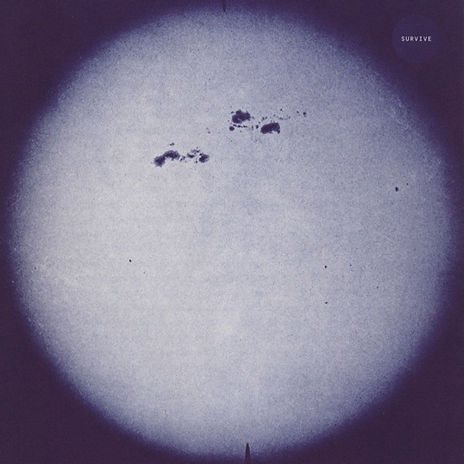
I also drew influence from some earlier songs, such as Tangerine Dreams' seminal album Atem (Dream, 1973), which has some excellent pad synthesisers that I attempted to emulate, and Power Core by Powerglove (Powerglove, 2013), which features an excellent gated drum that I was especially intrigued to.
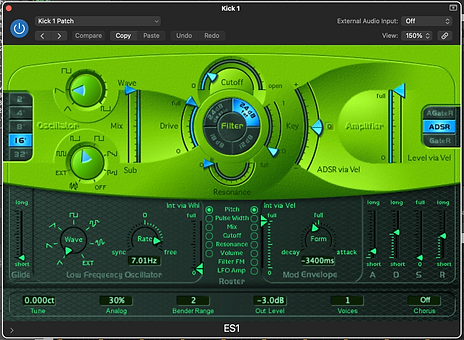
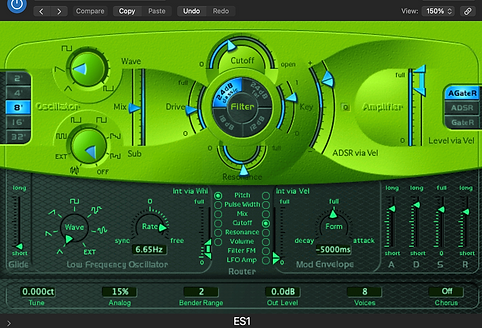
I started by creating the kick drum since it is a necessary component of the genre I had selected. I created the sound in ES1 when using a triangle wave and a low pass filter set to 7.01Hz. Because this sound occurs instantaneously and is quite sharp, it was critical for me to change the envelope settings appropriately while shaping the sound. I altered the envelope to give the sound a Fast Attack, Mid Delay, Zero sustain, and a fair Release. Additionally, by setting the pitch mod envelope to –3400ms, I was able to produce the rapid pitch down effect at the kick's onset.
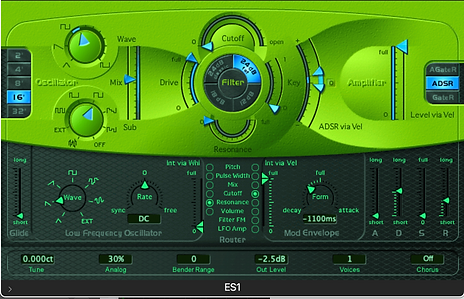
I was significantly influenced by the snares and hats utilised in midi tracks from vintage consoles, as well as the percussive layers found throughout All Levels at Once's Final Boss (Butler & DeBruyn, 2014), since they sound snappy but rustic owing to the artist's music being sampled. I utilised the white noise oscillator in ES1 and tuned the second oscillator to a noise wave to generate my hats, which are a basis of my chosen genre.

To further shape the sound, I utilised a no attack, medium decay, no sustain, and a medium release to get the percussive nature I desired. By continuing to utilise ES1 for all of the other hats and shaker noises, I was certain that they would have had a similar style and the timbers would all sound as though they were out of the same kit.
After losing inspiration for the tune I was attempting to create, I attempted to reframe the situation. For the most part, I'd been adept at incorporating synthesisers into other genres of music, such as rock and metal, as a nod or Easter egg to a bygone era that fills me with nostalgia. That is what I started to do, rather than continuing with the more ambient tune I had created. To bridge the gap between synth wave and more post-hardcore / gamer metal, I added the deepest cutting amp I could find.
Now drawing influence from tracks such as Essenger and Young Medicine's Lost Boys (Liber & , 2020)collaboration. I found myself still driven to Polyphia-inspired riffs and arpeggios, but with a desire to include grittier tones. Thus, I opened ES1 and built a filtered square wave to maximise the amount of tone and bass. Then, with the Bitcrusher acting as an overdrive to clip the sound, I was getting close to the necessary crunch.
I gave the bass synth some special love using the Toneforge - Ben Bruce Guitar Amp by Joey Sturgis, using a non-Apple preset plug-in. Plug-in parameters here.
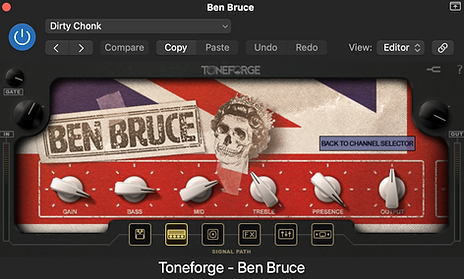
I made accompanying arpeggios for the melody using certain settings that I've since lost due to a save file problem. These were more based on a traditional sawtooth wave with a high end cutoff and a vintage square wave that began as my first try at playing the guitar. These helped fill the verse's void, since I was hesitant to record my own vocals for the song, and added a feeling of competitiveness between the two sections. This allowed me to leave the chorus in a darker tone, in keeping with the theme of facing a monster in a game.
Due to the fact that this is a metal song, I had difficulties locating an MPP student to assist me in filling in some of my more deficient bars. Fortunately, I was able to work out an arrangement with Andreas to assist in recording a few additional classical-styled riffs, which I utilised as a fill for my bridge later in the song, backed by the synth's resistance. Regrettably, this has also been lost as a result of a regression of my file to an earlier save.

My last touch to aid in the flow between some of the quieter sections was to create an oscillating bass akin to that used in movie and theatre commercials. This was accomplished by keeping the low monophonic synth simple and use automation to control the phase, spatial aura, and pitch.
Ambient Subtractive Synthesis
Sad Alron by Mark Pritchard served as the idea for my ambient composition (Pritchardson, 2016). As part of my endeavour to create an atmosphere of discomfort, I made a deliberate decision to refrain from employing a chord sequence that triggers a certain sense / emotion that I am particularly drawn to in my music. Additional ambient music, such as Padi by Terekke (Terekke, 2017), served as inspiration for this piece.
I began by playing random chords on an ES1 patch that I had created since I wanted this to serve as the basis for the rest of my track. In order to generate the sound that I want, I utilised a sawtooth wave and gave it the ability to be pitched up by 25% in order to create some tiny detuning in the frequency range of the wave. Afterwards, a low pass filter with a cutoff of 36.220 percent was applied, and a sine wave LFO was used to modulate the pitch at a ratio of 6.65Hz throughout the track, resulting in a crescendo throughout the track.
By including the bass drop I created for my genre-specific track previously, I was able to infuse the instrumental piece with familiarity while still keeping it isolated to begin. This meant that by the second variant, I was able to use elements from the first half while varying the design and tone of the sounds.

It's evident from listening to De-Orbit Speedy J (Paap, 1991), as well as Aphex's Rhubarb, that noise plays an important part in the mix since it helps to balance the high and low frequencies. Because my music included a high concentration of low- and mid-range frequencies, I chose to use noise to help balance the frequencies and give some brightness to the composition. The decision was made to give the layer as much movement as possible rather than keeping it on a single note throughout the song, rather than utilising a noise oscillator to keep the pitch steady. A tape delay gave the sound movement and blended as it faded, giving the impression of distance. Because the tape delay rate was set at 200.00ms rather than a note setting, the sound had the appearance of distance. The use of space delay was an effort to create an artificial environment in contrast to the lack of atmosphere I was seeking to communicate. I was successful in this endeavour.
Bibliography
Butler, N. & DeBruyn, A., 2014. Final boss. [Sound Recording].
Dream, T., 1973. Atem. [Sound Recording] (Ohr).
Liber, B. & E., 2020. Lost Boys. [Sound Recording] (FiXT Music).
Powerglove, 2013. Power Core. [Sound Recording] (Invada Records ).
Survive, 2012. mnq026. [Sound Recording] (Mannequin).
Paap, J., 1991. De-Orbit. [Sound Recording] (Plus 8 Records).
Pritchardson, M., 2016. Sad Alron. [Sound Recording] (Warp Records).
Terekke, 2017. Padi. [Sound Recording] (L.I.E.S Records).